24/7 Emergency Storm Damage Restoration in Charlotte
24/7 emergency storm damage restoration in Charlotte, NC. IICRC-certified technicians, insurance billing accepted. Call (980) 470-7725.
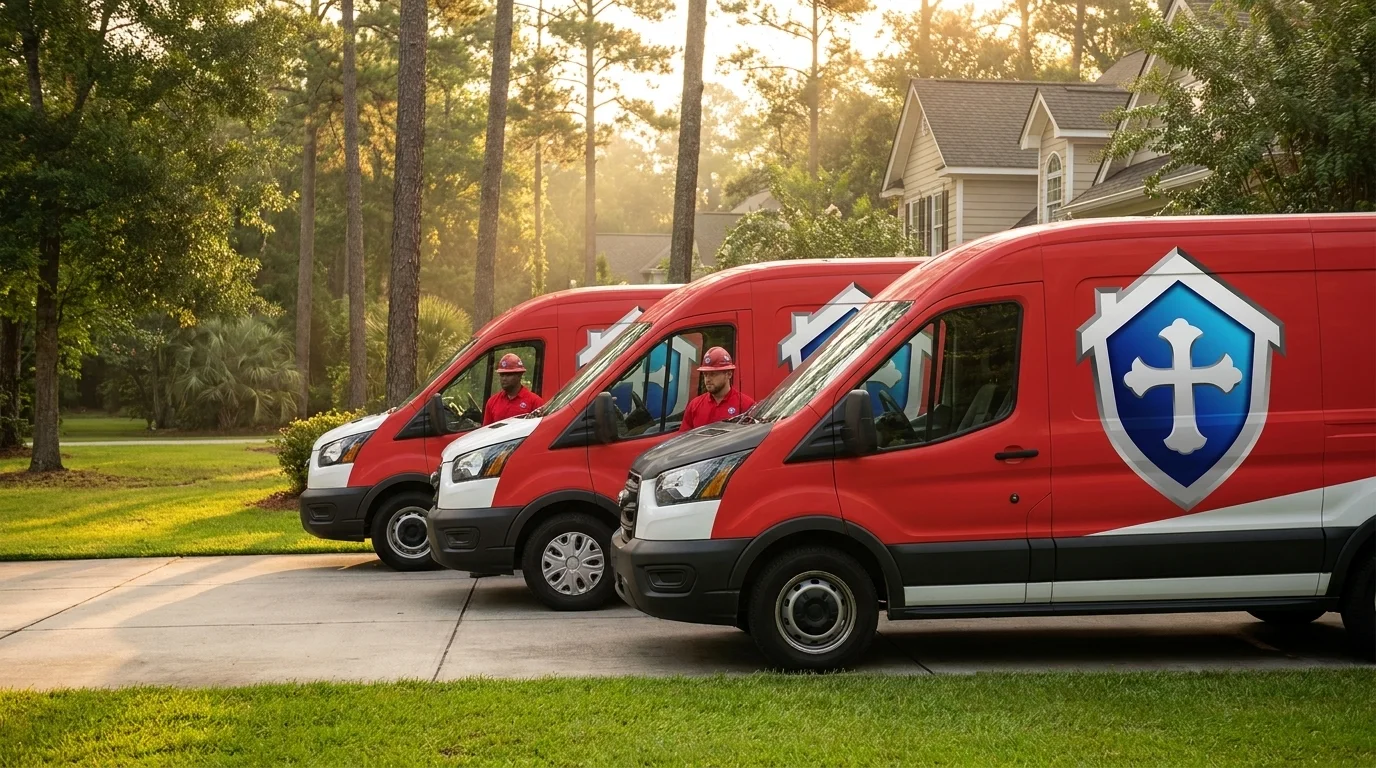
Our IICRC-certified technicians are dispatched from our Indian Trail, NC headquarters and are typically on-site in Charlotte within 60 minutes of your call.
Storm damage emergency in Charlotte? Call now for emergency service. We answer 24/7, and when a downed limb punches through a roof deck or wind-driven rain gets behind siding, the clock on secondary damage starts immediately, not when the contractor shows up.
Charlotte’s combination of mature tree canopy, red clay soil, and a storm season that runs from spring squall lines through the tail end of Atlantic hurricane season means a lot of local storm damage calls follow the same pattern: a tree or large limb comes down, a roof or window opening lets water in, and by the time anyone notices the ceiling stain, insulation and drywall have already started to wick moisture sideways.
Why Charlotte Properties See Storm Damage Issues
Mecklenburg County’s clay-heavy soil doesn’t drain quickly, and it doesn’t hold root systems the way sandier soil does. After a few days of saturating rain, even healthy hardwoods can topple in a 40 or 50 mph gust, which is common in the severe thunderstorm lines that move through the Charlotte area in spring and the remnant tropical systems that sweep up from the coast later in the year. Add in a housing stock that spans brick ranches from the 1960s and 70s alongside newer subdivision construction, and you get two very different failure patterns: older roofs with original decking that’s already fatigued, and newer homes where a single gutter or flashing failure can send water into finished space fast. Either way, once a storm opens up the building envelope, interior damage tends to outrun the visible exterior damage within hours.
Our Storm Damage Restoration Process in Charlotte
The first priority on any storm call is stopping active intrusion, whether that means tarping a damaged roof section, boarding a blown-out window, or diverting water away from an opening until permanent repairs can be scheduled. From there, our technicians assess what’s wet, how far moisture has traveled behind walls and under flooring, and what needs to come out versus what can be dried in place following IICRC S500 drying guidelines. On older Charlotte homes with plaster or true wood lath, that assessment takes longer because moisture moves through those materials differently than it does through modern drywall and OSB. We document everything with moisture readings and photos as we go, both because it drives the drying plan and because it’s exactly what most carriers ask for when you file a storm claim.
Reaching Charlotte from Indian Trail
We’re based in Indian Trail, and Charlotte is one of our core service areas, so we’re not routing a crew in from across the region when a storm rolls through. Depending on where the damage is relative to the Monroe Expressway and the connecting routes into the city, our crews stage equipment and head out as soon as a call comes in. During widespread storm events, when multiple neighborhoods are dealing with downed trees and power outages at the same time, we prioritize calls with active water intrusion first, since that’s where the damage compounds the fastest.
Charlotte Insurance & HOA Coordination
A lot of Charlotte subdivisions carry HOA rules that touch on exterior repairs, tarp visibility, and the timeline for getting a damaged roof or fence back to a “finished” appearance, which matters when a storm claim means a blue tarp is going to sit on a roofline for a few weeks while materials and scheduling come together. We document the emergency mitigation work thoroughly so it holds up with both the insurance adjuster and, where it applies, the HOA’s own repair standards. For homeowners who end up needing more than mitigation, our general contracting team can carry the project through full reconstruction, so you’re not coordinating a second company once the drying equipment comes out.
Local note
One pattern we watch for in the Charlotte area: a tree can come down cleanly on one side of a roof while the opposite slope shows no visible damage at all, yet wind-driven rain during the same storm has already pushed water under shingles well away from the impact point. Because Duke Energy outages often follow the same storm cells that cause structural damage, homes can sit with hidden moisture building for a day or more before anyone’s even back inside to notice it. We check beyond the obvious impact zone on every storm call for that reason.
If a recent storm left your Charlotte property with a compromised roof, a tree through the fence line, or water finding its way into rooms that were dry an hour earlier, get a tarp or board-up started before the next rain comes through. Call SkyGuard Restoration at (980) 470-7725 and we’ll get a crew assessing the damage and stabilizing the property.
Serving Charlotte from our Indian Trail headquarters — ★ 5.0 · 7 Google reviews
“Nick was absolute amazing! We had a flood that destroyed a good majority of our flooring and Nick did a great job keeping us up to date on the work he was doing and explaining the reasoning behind any work done. I really felt like he fought for us to get the best outcome and worked with our…” — Shaquille, November 2025Read our reviews on Google →
Storm Damage Restoration in Charlotte: Service Coverage
Frequently Asked Questions
How fast can you arrive for storm damage restoration in Charlotte?
How fast can a crew reach a Charlotte neighborhood after a tree comes down on a roof?
Do Charlotte HOA rules affect how a tarp or board-up looks on a damaged roof?
Are older Charlotte homes with original roof decking more vulnerable to storm damage?
Does Mecklenburg County's clay soil have anything to do with trees falling during storms?
Will my homeowners insurance cover storm damage cleanup and repairs in Charlotte?
Storm Damage Restoration response in Charlotte
Most Charlotte calls see a technician on-site within 60 minutes from our Indian Trail headquarters.